Sunday, July 31, 2022

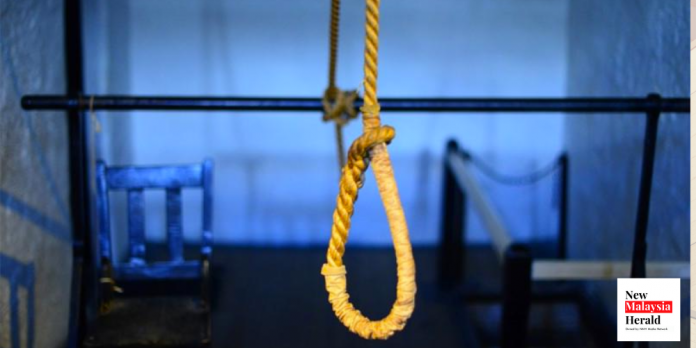
Death Sentence For Drug Dealers: Taking A Closer Look

Execution for drug traffickers. Still relevant?

Death Sentence for drug trafficking has been a thorn on the side of many policy makers around the world – especially having to deal with the protests. How effective is it? As a former rehabilitated alcoholic who had been in the company of recovering drug addicts, the writer finds the need to also weigh in other matters….

The opinion piece in here.

Senthozhan Senthkathirvanan (2022)

 This review appeared in New Malaysia Herald. I am reproducing here for record keeping:


Senthozhan Sengkathirvaanan: The Daze, The Deranged And The Dame

A Malaysian Tamil flick taking on the psychological thriller bull by the horn, underwhelming at parts, saved by the lead actress’ conviction and energetic performance

Malaysian films have some sort of self-limiting explorative nature. Genres can be visited but they are mostly restricted to Malay films. Films industries existing outside of behemoths like Hollywood, Bollywood (and its non-Hindi language sub-industries) and Hong Kong are usually more invested in making films that reflect their respective country’s culture and sociopolitical scenarios. 

As such, it is very daring for a Malaysian filmmaker to make Senthozhan Sengkathirvaanan, a Tamil film within the confines of a psychological thriller asylum – because it would be a mad business decision. 

Yet, first-time director Govind Singh pulled off a quiet, grounded, “don’t-wake-the-baby-up” serene Tamil language Malaysian-made thriller flick that has its moments and is certainly desirable for more. 

This review is a follow-up of the premier show on 24 July in TSR Cinemax Shah Alam, quite a grand affair where contributors were honoured and the self-congratulatory gesture was a mass proceeding -– where many were honoured on stage, with most recognised for being reasons for the existence of the film to the point that some may have direct connections to the Lumiere brothers.  

The filmmakers and stars also thanked audiences – made of mostly those in the “industry” or involved with the film – and were given tips on how not to have the film taken out of the cinema due to poor run. Support, encouragement, buying tickets by block – but nothing can stop the audience from moving their butts from home to the theatre hall if actual words of mouth are not encouraging.  

Anyway, since I was involved during the post-production of Senthozhan Sengkathirvaanan writing the subtitles, this is my second viewing perhaps with some tweaking involved. Nothing much changed except for the additions of various production companies’ names before the title credit that allowed time to rush out to get more popcorn or return missed calls. 

The story written by Govind and Vino Chandra centres on a somewhat aloof, strange, and, as we find out later, slightly deranged, off-the-centre-of-gravity dude by the name of Kathir played by Kash Villanz, who does some err…computer thingy – we have that scene of his fingers sailing across keyboards with nothing happening on the monitor. 

Who cares about the profession, much effort was taken by the filmmaker and writer to enhance the protagonist’s eccentricity, including the part where he shaves with a chopper (the knife, not the bike). He drinks booze aplenty and could have benefitted from product placements with brands like Johnny Walker, Ballantine and the likes in full display.

Then, as it is wont with Tamil films that couldn’t shake off romances in any genre like a wet canine, a girl gets interested in him – in this case, our heroine, played with gusto by Moon Nila, who ventures out to find out about our hero’s dark past even though he seems like a nice guy at one time and big time jerk in another. Boy, one itches to know his origin story, no?

So, we have unconventional behaviour on Kathir’s part, prompting the girl to snoop around, and some secondary plot involving a querulous couple next door – which is parallel to the hero’s abusive childhood.

Anyway, Moon Nila (whose name I am sure is not copy-pasted from a Google Translate result) is a formidable force in this flick. She had a skeleton to work with but worked on her additional skillset to add the pounds of flesh, with an ounce of pathos, a pinch of feminism, a fracas of humour, a frantic amount of courage and conviction that would make us care for enough to consider her falling for the jerk-hero as a minor misdemeanour.

If not for her character’s concern for the hero, we never would care for him, so she had quite a task ahead of her – the venture that was let down by the usual Tamil film affliction:  flashback-isitis. There was just one too many, but most of the current Tamil films are mostly never made without them – the audience are so used to it that they are not aware of it, like global warming. 

Despite what the film had promised, violence is far and few in between, and mostly in the background. The danger element are supposedly present throughout, but our butts are in no way going to the edge of the seat – it feels like reaching for the ceiling but touching the top of the cupboard instead. 

Another reason to watch this thriller flick is for the soundtrack, which was composed entirely by Kash Villanz. Before the teaser release, the producers released 3 tracks from this movie on the vhommiez Youtube channel. The first track is sung by Kash Villanz himself titled, Mudhal Mura, followed by Pasi Thookam Panjam and Yathey sung by Ganesan Manoghran and Kishen Dass, Michael Rao respectively.

This film will find its audience who had not watched earlier Tamil films like Sigappu Rojakkal (1979) or Puthiya Paravai (1964)– both of which explored the protagonist’s source and consequences of derangement and been influential with all those “psycho” characters appearing in Tamil films ever since.

All in all, the production quality is pretty good for a limited budget Malaysian fare – far more limited than the bigger Malay language films, of course, but that shouldn’t stop quality exuding from the writing and performances. 

A potential that may appeal to audiences who are tired of the usual “safe” Malaysian Tamil entries on small screens especially.

But don’t let that hamper your viewing experience. I thoroughly enjoyed Moon Nila’s performance – she inhabited her role like a comfortable glove and took us for a bit of an emotional roller-coaster ride – for that reason alone it’s worth sitting through the film.

Senthozhan Sengkathirvaanan produced by Govind and Kash Villanz himself will also be featuring popular Malaysian talents like Shamini, Cellina Jay and Chandinie Kaur.

All in all, Senthozhan Sengkathirvaanan is a passable thriller, and certainly a laudable entry from the microscopic Malaysian Tamil film industry. This psychological thriller will be screened in cinemas nationwide on 28 July 2022 onwards!

Sunday, July 10, 2022

Rocketry (2022)


Note: A film that exactly delivered what it had promised, neither disappointment, nor overstaying welcome.  Madhavan the writer excelled.

The review:

Being a fan of Madhavan’s and him (alongside Kamal and Rajini) being the only actor I follow online, I came on board of the Rocketry experience from the time it was announced.  It was a crazy deal.  Madhavan is not the most sought-after actor now, he never quite had worked close on any capacity other than just an actor with other directors is directing.  And writing?  Puh-leeze (*eye roll*).

And it as it turned out,  the ranking goes like this for Madhavan’s three role in this film (in my assessment,  that is):

1.       Writer

2.       Director

3.       Actor.

Many actors have taken a stab at direction, and most floundered,  let’s not even talk about the self serving writing,  often designed to bite more than what they can chew.

But Madhavan managed to regroup all he could muster, the three decades of experience working with varieties of filmmakers and technicians, crafting a compelling script that is not an eulogy to a still living larger than life figure, but an unraveling of the slices of life of a brilliant man who is not without his flaws,  who was, too bad,  and I don’t care if many disagree with this,  just born on the wrong geographical spot at the wrong time.

First and foremost, it doesn’t even feel like an Indian film,  at least in the contemporary sense, especially not a Tamil film.  None of those over the top (sometimes literally) showy cinematography or use of editing gimmicks that look two decades left behind.  Speaking of which, I don’t know why they dig up Simran whose cinematic record being having never used her own voice and performing mostly with just her hips, and emoting by contracting/flaring nostrils.  At least she retired the hips here.

The filmmaking itself deserves accolades, and as mentioned, never going over the top, telling the story as it is, of a man who was instrumental in the efforts behind an important scientific endeavour who later became victim of internal, and international politics, wronged and later absolved of the manufactured “crime”.

There may be complaints during the first part of the film where the science may bewilder many of those uninitiated on the rocket science, which would be majority of us – but Madhavan the director brought out fantastic performances from all around even the international casts who would normally sleepwalk their roles for paycheque.

As an actor Madhavan excelled in not crying for attention to himself – the ego of a director/actors who often projected themselves as larger than life heroes is completey out of question here. In fact, in showing his patriotism and dedication to his work, his character, Nambi Narayanan, withholds the message about the funeral of one of his scientists’ child so that nothing disrupts the planned assignment for his handpicked group of scientists. It showed the selfish side of him, very conflicting, but his conscience is cleared during the later part of the film. Madhavan was fantastic here - and I had always seen that crazed fire in his eyes many a times in his older films (used to maximum effort in Thambi, a guilty pleasure of mine).

As the director, despite the slow pace, he kept the emotion in check throughout the film often keeping us at the edge of the chair even though there is no shooting of guns or splattering blood.

Indeed, and speaking as someone who no longer watches new Tamil releases regularly, this is perhaps one of the most important films to come out in that language, though, as mentioned, this does not feel like an Indian film at all, let alone the Tamil version.

Yet, one cannot dismiss the bitterness expressed towards the end of the film, the appreciation for real genius and talent, amidst the society that has no respect for those, a society that is still clinging on to morbidly dumbass values from culture. I felt it strongly, and that is why I say Nambi Narayanan has no business in, at least, this part of the world.

Thankfully, this film will continue to remind us of that. Those who wrong Nambi still exists, in our society in fact… and that crab story will still persist when it comes to Indian community no matter which country it is in. It’s a sad truth, and Rocketry, more than a celebration of a genius, is a sad commentary on the failure of a society, of a culture, of leaders who are never in the business of grooming leaders but are only concerned about their rickety authority chair they are clinging on too. The collateral damage to their egoistical struggle is scientists like Nambi Narayanan,

This film makes me extremely proud to be a fan of Madhavan. After Kamal and Rajini, and to a certain extend Prabhu Ganesan, I had ranked Madhavan high as an actor way back then. But with a new dimension as a director, and most importantly as a good scriptwriter, I believe the new multi-faced avatar of Madhavan will get the recognition he deserves, a far cry from the heartthrob image he once possessed. I am really proud to be his fan.


RKP – 10 Jul 2022

Monday, June 06, 2022

The Money Trap (1965)

Rita and Glenn.... both apparently had
real life affair lasting decades
.

My beloved Rita Hayworth was already a faded star at this point….much like another darling of mine, Marlene Dietrich. The latter appeared in a semi-tragic role in Touch of Evil (1968), a former girlfriend of Orson Welles’ corrupt cop.

Rita’s is more or less the same role….and with longer screen time than Dietrich, she played a tragic figure, a gal who saw just one too many promises from men who are not all that they are cut out to be.

Her beau, ex, is Glenn Ford, a morally ambiguous cop who, through her, finds a large stash of money and heroin… and since his own current marriage to a rich socialite now requires serious funding seeing that her dad is planning to cut off the sponsorship, he plans to hide the stash…

Of course, this is the last of the few Film Noirs that flourished the previous two decades and the rule of the film dictates that the protagonists are doomed anyway – and the beauty of those films are just that, gloomy, downbeat and with shadows of dread following.

Both Ford and Hayworth are not new to this genre and the are both fantastic. This is not among the well known film of that era, considering the genre was making its way out,, lost in between big, colour extravaganza spy flicks and Rock Hudson / Doris Day comedies and the coming of the Brat filmmakers like Scorcese, de Palma, Lucas, Spielberg and Coppola. It will not be remembered…

….unless you are a fan of both stars… ME, especially as I wanted to watch this being the late entry in Hayworth’s ouvre. It is not a spectacular role, neither it is as memorable as Diettich’s in that Welles film… her performance was strong enough for a tragic character… at least I was moved.

A simple film, filled with morally skewered folks, running for about an hour and a half, definitely would be relegated to one of those forgotten B-grades with A-grade stars – or at least Hayworth was. But unlike her earlier roles that made oh-so-elated, this one just made me said – RKP 5/6/2021

Friday, June 03, 2022

Vikram (2022)


Note: Tales of secret agent Arul Kumar Vikram continues. Yes, you gotta be a hardcore Kamal fan to know that name in full.

Is this a crazy coincidence or what? That we would get two sequels to two films that came out from two different film industries in 1986. There was Top Gun: Maverick that followed the lead character’s adventure 35 years later.

That’s Hollywood and Top Gun was a huge blockbuster. But this film, which has the same title as the original that came out the same year (1986), is indeed an unofficial sequel to a flop – which is why the follow up is rather ambiguous in its connection.

Well, not really if one were the evaluate the presence of the title song from the original (Vikram!!)… and that Kamal would mouth the other part of the lyrics, as well as the use of his old pix of that era in one of the exposition scenes.

Logesh Kanagaraj is definitely a Kamal fan and it shows… and like many of us who grew up as his fans in the 80s, it is the action packed, ass kicking Kamal that most of us are fans of – much to the chagrin of the other kamal fans who worship his “genius” which mostly are recycled Hollywood stuff. But I don’t want to get into that argument.

The film picks up with the “death” of the protagonists… something that is going to nastily lead us, yes, to flashbacks…. Something I had always complained about when it comes to Tamil films, but its okay…it is expected. Then, there’s routine investigations; and some run of the mill poorly choreographed action with CGI blood splatters and shooting. When the hell are they ever gonna work with squibs and proper blank shooting guns….I'll never know. They spend shitload of cash in elaborate song sequences and unnecessary travels over the years and no one invested in that movie pyrotechnic toys... 

Back to the flick,  we are introduced to three main protagonists, Kamal’s Karnan (a nod to Nadigar Thilagam? Who knows), Fahad Fadhil as Amar, the (in my opinion slow and bumbling) investigations officer of a certain “untouchable” team and of course Vijay Sethubathi as the baddie, Santhanam.

The latter gets to chew his scenery like nobody’s business…more often than not, reminding me of the more instinctive (as opposed to Kamal’s methodical) performances of the early Rajini, especially when the later was stealing she's even from Kamal playing characters of darker shade.

Fahad had thankless role of playing a routine role….though as a performner he is top notch, his character is not well written … his seemed to be crafted as  an intelligent officer, but he sure is as dim as an old lavatory light bulb (the ‘realisation’ scene was supposed to be clever in the writing, but didn’t improve on the protagonists believability being someone on top of his game).

Kamal, of course, goes back to the action route that the 80s burdened him, and is totally believable in his physically demanding performance as he edges towards big 70. I think the success of The Expendables franchise must have given him the confidence to take on this role which at first glance may not be age appropriate (it is actually,  the character is 60 years old).

The plot may be convulated to some and not to few, frankly when flashbacks started occurring like the rainless lightening, I didn’t give a damn. Some dialogues are gonna give the exposition anyway and we are back on the story’s track.

The small audience that watched with me in LFS Rawang were euphoric during the introduction of Kamal and Vijay Sethubathi (who gets more heroic intro scene)…. But I clapped only once… for Agent Tina. What a revelation, and what a character…first time I am seeing a gal in a Tamil film fighting like a man, too bad... err,  never mind I won't spoil it!

The action choreography are muddled, poorly edited and messy as expected, I was totally not hooked, just waited for them to be over. Even the large array of arsenals now prevalent in Tamil films, since the days of revolver and that one automatic that they keep cocking, didn’t get my attention.

Yet, it was a good fun. Anirudh like most of his peers, belongs to those group of youngsters who are not great composers, but are capable in creating themes, and heroism surrounding soundtrack – most of which sound heavily recycled…it is peppered here liberally and may elicit some goosebumps (nope, not me….).

The Vikram sequel thing? Well, the film more than hints that it is indeed a follow-up but while the original was wholly fantasy 80s masala romp, this follows the director’s own more gritty world filled with unkempt personnel universe, connected to his previous outings.

Kamal fans will rejoice that he is back on big screen after quite long and certainly can taste all that he has to offer as pure actor (very little input in the script without doubt) and also some of the in-jokes and references to his past films (that could have been avoided if Logesh wants to keep things to his own little Tarantino-like verse).  There is a cameo at the ending which everyone knows about which, to me, was like a speed bump before even there was a proper ending. I mean, come on. Surya doing over the top baddie felt more like he was trying to do a pale imitation of his far more talented brother. This could have been avoided. - RKP 3/6/22

Tuesday, November 16, 2021

Pengalaman baru dengan rakan lama: Bahasa Melayu.


Baru-baru ini saya telah selesai menulis skrip untuk rancangan majalah yang akan disiarkan di RTM. Menulis skrip bukanlah pencapaian, baru bagi saya… saya pernah menulis skrip untuk satu siri rancangan yang juga diterbitkan untuk RTM dua dekad dahulu.

Skrip yang diterbitkan ketika itu untuk Malaysia Book of Record adalah dalam Bahasa Inggeris. Kali ini pula, rancangan yang bernama Skup Jurnalis, seperti yang dapat dilihat daripada tajuk, adalah dalam Bahasa Melayu.

Kali terakhir saya menulis dalam Bahasa Melayu lebih daripada satu atau dua ayat adalah ketika saya menduduki peperiksaan subjek yang sama bagi Sijil Tinggi Peperiksaan Malaysia pada tahun 1992.

Pencapaian kini adalah kebolehan saya menulis kembali dalam bahasa kebangsaan, bukan satu ayat, atau satu perenggan... tetapi beberapa muka surat. Walaupun jalan bahasa tidak lari daripada cara penulisan bahasa Inggeris yang lebih saya kenali dan selesa, terdapat perbezaan disana dan sini. Apabila saya membaca balik apa yang ditulis, saya dapat faham... ada yang pelik dalam penyampaian tulisan tersebut.

Yang mengharukan, dan membanggakan adalah saya masih lagi ingat apa yang dipelajari lebih dari beberapa dekad dahulu. Memang ada kesalahan tatabahasa disana dan disini, dan ejaan yang berbeza sekarang, terutamanya dengan pengimportan perkataan-perkataan daripada bahasa Inggeris (yang agak berlebihan, tetapi tiada satu bahasa yang original didunia, semua melalui evolusi dengan mengambil masuk perkataan dan frasa daripada bahasa lain).

Oleh itu, saya ingin memulakan fasa baru dalam perjalanan kerjaya saya dengan merujuk kembali apa yang telah saya pelajari zaman sekolah dulu. Sepatutnya, Bahasa Melayu saya adalah lebih mantap dari Bahasa Inggeris. Untuk SPM, saya dapat A2 untuk Inggeris dan A1 untuk BM. Saya tidak dapat mengambil bahasa Inggeris untuk STPM, kerana sekolah (swasta, sebab SPM saya tidak cukup kuat untuk masuk sekolah kerajaan) tidak mempunyai guru untuk subjek tersebut.

Jadi, saya belajar dan menduduki peperiksaan untuk Bahasa Melayu (bukan Bahasa Malaysia seperti SPM, masa itu) dan bolehlah tahan... saya dapat A dalam mata pelajaran tersebut. Melihat bahawa keputusan mata pelajaran yang lain agak lemah, subjek Bahasa Melayulah yang menarik saya keluar daripada gaung kegagalan.

Jadi, itulah alkisah. Saya ingin merakamkan penghargaan saya kepada semua guru-guru bahasa, kedua-dua, kerana ialah yang memberi saya harapan setelah melalui zaman kegelapan dalam kehidupan saya. Ini adalah catatan penghargaan tersebut. - RKP 16/11/2021

Tuesday, June 15, 2021

Internet Activism: Conscience At Your Fingertips?


The rise of the Internet and communication devices based activism, slactivism, clicktivism, the use, the abuse and the obtuse.

How often you get invites through social media platforms, to sign up for a campaign, where all you have to do is just click and click and it's done. What do you know about that campaign, the issues and the related information? Does it matter? Who cares, right?

Welcome to the age of Internet Activism... which has other names like slactivism and clicktivism. But what makes it tick, or, click? How do people relate to some of these causes and have them lift their heavy fingers and press the screen to make an intended err... life-altering commitment?

The often accepted explanation is that much of it has to do with ideological self-identification, which, sadly in Malaysia's case, is often related to one's race and/or religious background – often a perfect eco-system to whip out the "victim card". Mind manipulation of the mass is still as easy no different than the early days of tribal religious conversation, that a cry of a "victim" immediately put the peer pressure on the social media users to get into the action without even wanting to know what actually had been transpiring, the history behind it or does it even matter to him or her personally.

There is a study citing that it is usually the narcissist who use plenty of victim card. Popular culture – your religious texts included – glorify the underdog and demonise the powerful ones. It's cool to be an underdog, therefore to related to one, but usually, underdog stories comprise of 70% of the time suffering, 29% fighting back, and only that 1% where you raise the gloved hand in the air to an Eye Of The Tiger soundtrack reprise.

Therefore, identifying oneself to underdogs it is easier now to have the voice heard in unison through the social media, by imposing themselves, with popping veins of narcissism, and use victim cards to make the voices heard or read, (“government is patronising us by eating maggie mee”... “I may not pay taxes, but they can't take away my illegal parking rights!); and it's easier to get support for those whines than, “Hey, let's put our head together on this legislation before we bring it to the parliament”.

But what's the make-up behind the attitude towards these form of activism? Perhaps science can shed a light. Perhaps it may have something to do with...

NPD

Make no mistake...online activism is especially useful for those who are unable to participate in acts of physical activism, notably, as mentioned here, “the disabled and mobility-impaired people who cannot attend marches also find online activism tools a helpful way to promote issues and protest inequalities.”

But there is the selfish side of things that need to be pondered bout. There seemed to be much concern amidst the discerning of us that most of us with a cellular phone, internet connection and social media apps are slowly succumbing to what is known in psychology and related discipline circle as a narcissistic personality disorder (NPD).

Some of the symptoms (taken from the above link) include the following:

  • sense of entitlement
  • denial
  • delusions of grandeur
  • grandiosity
  • Projection
  • need for control
  • narcissistic rage
  • low empathy

Most of us can tick all the boxes, but let us flesh it out a little bit more on...

NPD and Activism

Some of the most successful activism has its impact all over the world. For example, one of the most important of recent years: “Black Lives Matters”.

The George Zimmerman case in the US, where he was charged for the murder of Trayvon Martin but acquitted, started the peat fire of Black Lives Matter (BLM) hashtag, went on to become a raging online forest fire so much so that it was rewarded with millions of signatures, and even endorsement from celebrities who need to have themselves to be in the public eye radar anyway. Zimmerman was then charged with second-degree murder, instead. BLM collected around US$90 million last year (there's also news about the co-founder of the movement who bought a US$1.4 million house, but that's a tale for a different day).

The same activism was played a big part in the rise of the Occupy Wall Street and Arab Spring movements that relied heavily on social media for the organisation of the rallies, and ballooning up to the size of imposing headlines.

Alas, it is very noticeable that there is clearly the presence of emotional blackmail involved: you are with us or, well, you better be with us, you oppressing, suppressing scumbag. Of course, the "us" is really "me", The whole shebang leads to what is referred to as Performative Activism, which according to the wiki is defined as “referring to activism done to increase one's social capital rather than because of one's devotion to a cause. It is often associated with surface-level activism, referred to as slacktivism.”

Social capital here refers to the network of people we have in our circle, the relationship, work, an interest group, etc. Note how activism now had evolved to selfishness, how many are in our circle, with us.... what cause?

Slactivism and the left-outs

There is a tendency to think that what is trending is the most important stuff going on now, and it will be lost on those who don't give two hoots about it. We can accept that users across the generations who spend up to 99%, if time permits, of their waking hours staring into the screen (including yours truly) will find it endearing to dedicate their seat-burning hours to various causes.

Still, this may not exactly be the case with older generations who are less likely to make their opinions heard. And according to this article, a study by the US Pew Research Center, noted that Americans aged between 18 and 49 are more likely than those aged 50 and over to have used hashtags related to a political or social issue; 20 per cent compared with 8 per cent, respectively.

But not only does online activism tend to engage younger generations more, but it's also naturally attracting a more educated crowd. And those with the communication and technological skills to get their point across would actually able to win the online arguments. All it takes is highlight the "loser's" spelling and grammatical errors and you win the argument.  

The older generation though, many without the savviness or patience, tend to gloss over these issues... If wisdom comes with age, then wisdom may also be taking a break during this supposed life-altering choices and decision-making process. One wonders why.

So, are the older folks sidelined? Or does it matter after all, when the voices of the younger generations are going to determine the future... which will be questioned by the latter-day younger punks using the tech of the future to do their own version of activism.

My old fart-ism aside, the Millenials especially are indeed a lot more discerning than what we can give them the credit for. According to this piece, millennials “tend to place less value on the acquisition of things, including the traditional settling down purchases of cars and houses, and more on the acquisition of experiences. When millennials do buy things, they care more about where they came from and what the companies that produce them are like,”

Ethics is a concern, and activism is the best place for the young 'uns to express their concern. But would that do?

Not too far a time ago, a study found that “75% of the Millennial generation uses social media platforms to discuss issues that matter to them. It also found that 58% of Americans think using a hashtag related to an issue is an effective form of support. The problem critics see is that online support isn’t typically backed by actions that make a difference.”

But as sceptical as I am, let's recall one hashtag campaign that was a huge success: remember the #ALSIceBucketChallenge? The ALS stands for Amyotrophic Lateral Sclerosis and the draw was sch that almost nobody knew what ALS exactly was, when they were busy funnelling money to see wet bodies... or, am I being negative? People genuinely cared for the cause, didn't they? Hmm?

Well, it seems half of those who were polled in the UK, for example, never really donated, as reported by The Independent. Yeah, they were in it for the err.. titillation and that's about it, so much for hashtag activism. Let's not forget that there are far more serious diseases, but the funding was directed only at ALS. Perhaps #stripforcancer can generate gazillions, some of which will be siphoned off anyway.

And this sort of hashtag activism also may lead to what the psychologists call Moral Licensing: a form of bargaining to whitewash current bad behaviour with past good ones. In other words, as mentioned here, "...when we are confident we have behaved well in the past, and our actions demonstrate compassion and generosity, we are more likely to explain away acts that are selfish, bigoted, or thoughtless." So, what if I killed a bunch of teens, I participated in the ice bucket challenge. Therefore does it really.....

Help or who cares anymore?

At most, all these activities aim to mainly just raise awareness. That alone does not help. There is more to just collecting a handful of money and shoving it into the safe of a medical facility... On the other hand, the activism of similar nature is just as good in collecting hates and malicious intent, just as fast.


And it also clearly indicates the nature of excitability, where the attention span of an average user is getting shorter and shorter. In turn, hashtag campaigns usually have a lifespan of a housefly. Take, for instance the campaign to save 200 Nigerian girls kidnapped by the Boko Haram group (#BringBackOurGirls) in 2014, millions have been contributed but after seven years, while some have escaped and were released, more than 100 of them are still missing. Most of those who participated must have forgotten the whole fiasco in the following year.

It doesn't help that the ones rescued became some sort of celebrities and their lives just got worst, they had to be protected, and in military or government control all the time.

While these form of activism had in the past also been used for defamation and condemnation, it can affect the leading activists themselves. Noted Internet savant, Aaron Swartz, 26, who at a very young age helped to shape the online stratosphere through his co-founding of RSS ( news feed) and Reddit (social news aggregation)... later committed suicide.

It is a well-known fact that at that time he was plagued by legal problems arising from his aggressive activism. Slactivism does not only has the capacity to hurt others, but also the initiators. Stigmatization, the break-up of relationship over misunderstanding and disagreement on the activism cause are some of the side effects.

Ultimately, everything evolves. There's a half-remembered quote from a film somewhere, where a character says, paraphrased, "governments change, the bullshit remains the same". Whereas, platforms for activism may move from the street to the palm of one's hand, and, in a near future, instructed from the mind itself – wanting a chorus of emotional participation to lift a finger (or press) for something someone thought is important can be both selfless and selfish.

As usual, history will be the best judge. Then, again, history used to be determined by victors... but that would be passe, history will also be determined by armchair cultural revisionist... and they will mostly be stuck at this rampant hashtag slactivism phase, and the sheer exhausting the number will perhaps have them themselves start their own hashtag campaign #stophashtagactivism.
Monday, March 01, 2021

Moving...pictures?


Note: Originally I wrote this piece for the Malaysia Box Office Facebook site on 20th November, 2020.. Plenty more cinemas have closed down after this piece, notably Golden Screen Cinema which shut down its theatres at Berjaya Times Square and Cheras Leisure Mall, I've added an emotional quote from Spielberg to conclude this err... plea?

The Covid 19/Coronavirus pandemic is not a local phenomenon (no, not like the immortal Selangor water woes), it had hit global community left, right and centre, yes, including the political leanings. No one is spared. Young, old, teens, or supporters of Manchester United... the virus is like the Terminator, only with Punk-ish points.

Speaking of water woes, the film fans, movie buffs and cinema aficionados world over face the somewhat the same situation, we are now bereft of any flicks to watch on big screen.

In Malaysia, we were saddened by the closure of MBO, and again, this is not a local issue. Britain's second-biggest cinema chain has drawn the curtain too. And in the mightly US of A, the Regal cinema is temporarily shutting its door and that is going to impact 40,000 employee in the US and 5,000 in Britain.

Most of the films that started out big, promising to smash across the big screens world over, have now pocketed their smugness and humbled themselves to smaller screens, may it be Netflix, or other OTT platform (Over The Top – referring to content provision through internet, not that highly forgettable Stallone flick). Smaller screen is the new black for filmmakers. Sad, but true. Or is it so?

And, does it look like Edison has won. Why?

There has been conflict as to who invented cinema. Well, like most stuff, it has always evolved from something. Cinema definitely had a very humble (probably smelly) beginning in dank caves where the men and women of neolithic age used shadow to tell stories. It's the same old concept today, except the audiences has grown from own family members, neighbours to the irreprehensible members from Star Trek conventions.

Most of the time, credit goes to the master inventor/thief, Tomas Alva Edison who invented the kinetoscope, a device where you can screw your eyes into a viewfinder and watch the reels. Of course, it feels voyeuristic, with the keyhole approach, but sitting with a the large crowd as enabled by the big screen innovation through the Frenchmen Lumiere brothers' invention of camera and projector.

With the cinemas industries lifespan uncertainties, we are back at watching small screens ala Edison who personalised watching moving images. Or will this be the future of cinema?

Take the case of The Irishmen, for example. Directed by Oscar-winning, possibly one of the greatest filmmaker in Hollywood, Martin Scorcese, it has the magnitude of a huge Hollywood epic, bringing in a team of brilliant casts, and genius crews (I can't vouch that for, say, the Key Grip, but hey...).

Apparently, the main reason why it went to Netflix, instead of letting screen bloods out for wider audience, is simply Scorcese wanted it to be so. He didn't want it to be on big screen where it was infested (my word, not his) with comic book heroes, and there is no place for more artistic presentations such as his. Apparently the studios have passed The Irishmen, a costly production, thinking that it will not be able to make back the dough enough for them to laugh their way to the bank like The Joker.

In addition to Scorcese, Guillermo del Toro, Alfonso Cuarón, Paul Greengrass, and the great David Fincher found second home there. This is just the beginning and it doesn't look good for big screen trade. And now the goddam virus is looking to end it all, or would it?

What is the next step of cinematic evolution as far as the silver screen is concerned? One of the possibilities are that it will still be kept alive as one of the profit centre arms by the non-traditional studio. In fact, the very Netflix has bought a cinema last year, somewhat saving the “ailing industry” as the linked article pointed out...It also could be that to qualify for Oscar nominations, films have to have run in an LA theatre for seven days.

Will the big studios give up on cinemas then, thus ensuring the death of the dear dream theatre of darkness and light? Not so, if the Scorcese's nightmares are to be kept alive. In fact, it is argued that low to mid-budget films may enjoy their run on small screen, but not so the biggies. Franchise flicks like Avengers and Tom Cruise's Mission Impossible (7 on the way), need the cash cow in form of mass ticket buying.

Right now, everyone is tied up at home, and the four walls is going to bore the heck out of them one day. There is a possibility that this is just suppressing the audience, and when the time comes for all to come out be in masses, there might be mass cinema door opening, in fact as mentioned by Tim Richards, founder and chief executive of cinema chain Vue International, in this piece:

“....Families, couples, individuals are being tied up at home for weeks or months now...When it is over there will be a demand to get out like we have never seen in history. There is no scenario after lockdown [where] people will say ‘I’m not going out, I’m staying in to watch Netflix’.....”

Post lockdown, will the audience, fed-up with claustrophobic smaller screen (no matter how big their TV screens are, they are not going to match the big screen... the ACTUAL big screen), push their way out to the cinemas? Or will they be consumed with post-Covid 19 paranoia and eschew anything involving crowd? Did Edison win this round, with personal film viewing snatching the trophy from mass gawking at the big screen?

Not too fast, Thomas... in addition to the content, its quality, its shape, size, taste whatever...what's missing is the experience. Sure, you can cook a gourmet meal at home, dim the light, light candle, and do the double role as a waiter with fake French accent and the “customer”... but will that be the same as in actual, proper, restaurant and saying (like in When Harry Met Sally, 1989, in case you are missing the reference) “I'll have what she's having”? In the theatre, everyone has the same thing.

Let us not even get started with the concessions, burn as much popcorn as you want at home, you are not going to get the same texture, aroma...most importantly, the taste you are going to get in the movie theatres. In fact, that is where the theatres really push their profit margin... Yes, its the goddam popcorn you are, err, popping that has been keeping the theatres alive, where the concessions contributes 85% to the profit.

Eating popcorn from that humongous tub, sucking carbonated drinks, heads stretched upwards staring at the screen, losing yourself amidst the caramel taste in your mouth is not an experience you are going to get at home, where you don't turn your mobile phones in silent mode, and your fellow audiences has too close a personal relationship with you.

And have opinions while watching the show.

Watching movies in a theatre is not a pastime. Its an experience. Its a ride for the audience to getaway from reality, a safe haven instead of alcohol and drugs, to be in the shadow, watching the light, being transported into a different world, now that the sound system and other innovations have been making the experience more visceral.

Let the OTTs be, but note that quality of the streaming will be questionable. Why? Well, here, it noted that the main players announced that they are reducing the picture quality in order to cut the data going to homes by 25% so that the Internet doesn't get bottlenecked.

Sounds familiar? Sounds like how the products' quality become less awesome as they become mass-produced? Soon, the produced films for OTT will be offered in inferior packages so the service providers don't have to do the quality reduction themselves. You don't get this just because this movie theatre screen is slightly smaller than the other. Edison's Kinetoscope didn't make it, Lumierre's invention did. Big screen is here to stay, it just has to evolve into something more awesome as half a century ago it went into widescreen and started stereo sounds that got audiences to start coming back in drove despite the wars, and the invasion of television at homes.

Cinemas in Malaysia is going through just that, some sort of continental drift, a big evolution that is going to make it much more awesome with newer innovations and most importantly, better experience for audiences, who are weary of indoor life, and are ready for that dark hall escapades.


Additional notes: 1st March 2020

It is good to add this quote from a piece by Spielberg who wrote eloquently and emotionally for Empire Magazine:

... In a movie theatre, you watch movies with the significant others in your life, but also in the company of strangers. That’s the magic we experience when we go out to see a movie or a play or a concert or a comedy act. We don’t know who all these people are sitting around us, but when the experience makes us laugh or cry or cheer or contemplate, and then when the lights come up and we leave our seats, the people with whom we head out into the real world don’t feel like complete strangers anymore. We’ve become a community, alike in heart and spirit, or at any rate alike in having shared for a couple of hours a powerful experience. That brief interval in a theatre doesn’t erase the many things that divide us: race or class or belief or gender or politics. But our country and our world feel less divided, less fractured, after a congregation of strangers have laughed, cried, jumped out their seats together, all at the same time. Art asks us to be aware of the particular and the universal, both at once. And that’s why, of all the things that have the potential to unite us, none is more powerful than the communal experience of the arts.....

I almost cried... 

Monday, February 15, 2021

Radio Goo-Goo....

In revisiting the first James Bond flick the other day, DR. NO (1962), there was a scene in the opening where a pretty gal tries to communicate with the British MI6 from Jamaica using a two-way radio. There were dials to turn till she got the connection correctly, and had to end her part of the ongoing conversation with “over” to let the other person speaking. It was a great way of talking, could have solved many marital woes if couples quarrelled over these devices, as I imagine it: 
Husband: Dear, I can't eat the breakfast. Over
Wife: What's wrong? Over.
Husbdand: Nothing, but..but...Over
Wife: But what???...Over
Husband: But the toast was burnt. Over 
Wife: I didn't do it on purpose, it was the cat that did it. It was after a mouse, the mouse was after the cheese, the cheese melted and …. 

Now, Imagine, the husband cannot interfere till she's done and says “over”. Less he packs up anticipating it and and leaves saying, “...you did say it was over...” But I digress. 

You see, February the 13th was International Radio day (two days ago). Unfortunately, it was overshadowed by February 14, the Impress Gals With Flowers and Chocolate day. It also happens to be my son's birthday, and what a terrible purpose-filled life his would be. Now, it's hard to tell, but has radio become less or more relevant today? It is still around, despite the fact that everything is audiovisual, plus effects.

Like this piece from the UN, nevertheless, that states: “....As the world changes, so too does radio – evolving as it records humanity’s history by following and adapting to societal developments. This has been extremely clear during the coronavirus crisis, where, among other things, the medium has made it possible to ensure the continuity of learning and fight against misinformation....” 

Growing up in the plantation, the radio was integral for us, indeed, it was almost soundtrack of our life in retrospect. The station may, perhaps, be playing a beautiful song about a girl's pretty face, which is compared compared to flower; and imagine at that time your mom found out that you finished the pastries she made for tea slightly after lunch, and all hell broke loose. 

Which means, when you are a forty-year-old overworked accountant listening to mp3s in your iPod on with an urgent rendevous with a commode (iPoop?), this song pops up and that scary memory overwhelms you, and suddenly everything shrinks to the point of requiring a pincer for extrication. Thank you, radio. But forget about music, there were plenty of dramas. 

No, I don't mean interviews with people you don't know and don't care where the most drama is when someone tries to find the right word. This is the high point of listening to radio, where searching for words the DJ lets music play while a monkey winds his key. 

Back then, there were plays on the radio. In case of Tamil language stations which we were listning to, the voice actors would be belting out their best imitation of Sivaji Ganesan or Savithiri which can be nauseating at some point, though as kids we are not actually listening to them, we were just hearing them in the background possibly because we are probably studying, or playing, or in my younger brother's case, having another encounter with a goddam snake. 

Yes, take any generations from now to back in most decades last century, radio became the chief most nostalgia-sentiment maker. The radio of these days are mostly driving companions. When I was driving Grab (e-hailing) for six months recently, I'd switch on Bernama radio, a news station with lots and lotsa interviews, some interesting, some boring...but keeps my mind active and most to let the passenger know that they have a driver who's awake.. 

Occasionally, I gathered up enough guts to foray into other stations only to be blown to smithereens of guilt particles. The same “I gotta rush to the loo” hurried presentation, or deejay-ing, and jokes by the DJs that are about as hilarious as watching grapes in the process of becoming raisins.
 
Things actually got worst at the other stations compared to what I wrote almost two frickin' decades ago here (VCD was big, back then): “...The shows in the station is becoming the marketing tool of many companies. Marketing is a far too sophisticated and polite a word to these self-inflated, smart-as-a-pirated-VCD-vendor promoters, who are usually the founder or the chairman. The presenter and the promoter take turn in rephrasing their one sentence structure, into various versions of praises and boasts.

At times I would wonder who the real presenter, I mean the promoter, is. Hell, who cares anymore....” 

How dumb I was those days. I was wrong to think of radio stations as a marketing tool for many companies. Stupid prophecy. Actually, radio stations have now become is a marketing weapon, and sex toy for many companies – by which I mean, the companies throwing PR assaults on us and pleasuring self using the broadcasting tool. 

But I believe in evolution. Everything evolves, to stay constant is to stay irrelevant. Radio is evolving into a beast that I am no longer familiar with. It will not exist the same way, now that online radio stations and free podcasts are becoming equally popular. Unlike back in days where you had too few stations to choose from, these days of radio-sphere is filled with millions of stations online, on-air, in your car, bursting out from your mobile devices, barking in echo from shopping malls... and yet, they are not crystalised enough for one to bring to the grave with those sentiments and nostalgia attached.

I am wrong of course, and I am not even mourning over the fact that what was once integral, is now just something we integrate. It's like, we still have James Bond and Batman, who are no longer event makers, but just plain contents. 

Speaking of James Bond, remember the girl with the radio communication device from Dr. No I was mentioning at the opening of this article? Yeah, she got shot immediately in the scene. Bullet through the right boobs. There's something symbolic about radio being no longer about communications, and something dying in the heart of the entertainment business. Or maybe I am just sad that a cute gal got her boobies shot on screen.

Orbituary and Tribute: Dr. K.S. Balakrishnan

It is with great sadness and distress that the family of Dr. Balakrishnan announce his demise which occurred due to heart attack on 5th of M...